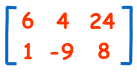
This is one of the example of what matrices look like:
And this is one of the examples of adding in matrices
To add the two matrices given below, we can add the numbers with matching position
(example source: Math is Fun)
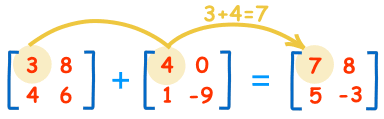
The calculations work like:
3 + 4 = 7 8 + 0 = 8
4 + 1 = 5 4 + (-9) = 5
This is one of the examples of subtracting in matrices
To subtract two matrices: we can do it the same way as adding (subtract with each same position)
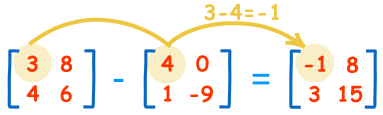
The calculations work like:
3 - 4 = -1 8 - 0 = 8
4 - 1 = 3 6 - (-9) = 15
Chapter 9:01
Defining a matrix, and Some Matrix operations
The example of how to do it is shown above.
Some matrix also comes with a story. For example a there are 8 people, 3 of them are 12 - 15 years old, and the rest are above 16 years old.
For example they go to a supermarket one by one, and we can make the data of who went there first.
Chapter 14
14:01 Translations
This is one of the example of how to do translations

From rotation, we can obviously turn it, as in just fold the graph or paper so it would look the same.
From reflection, it's really obvious to just put it together because it's face to face with each other and it has the same figure.
From translation, by slide, we can just stack it together so it would fit with each other.

No comments:
Post a Comment